
INTERVIEW: Francisco Calderón M. – Photography: Sebastián Molina
Sebastián Molina is a Valdivian classical guitarrist. At the age of 16 he fell in love with his instrument. Possessor of great virtuosity and musical talent, in his words "you have to work very hard, no matter how talented you are."

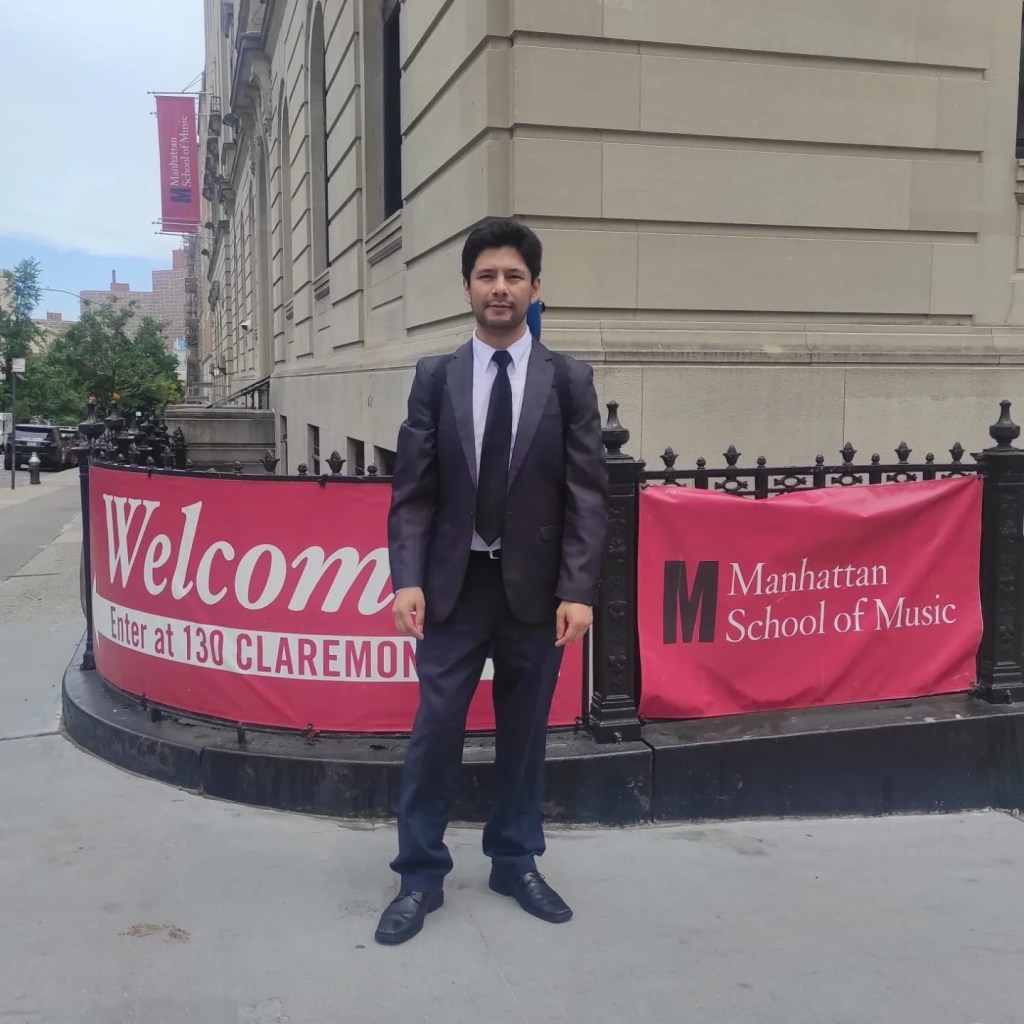
He has recently graduated from his Master of Music studies at The Manhattan School of Music, in New York, United States, thanks to the support received as a scholarship from 4 institutions.

At MSM he has been a student of the famous guitarist David Leisner. Today Sebastián tells us about his experience and his life behind the guitar. This is his story.
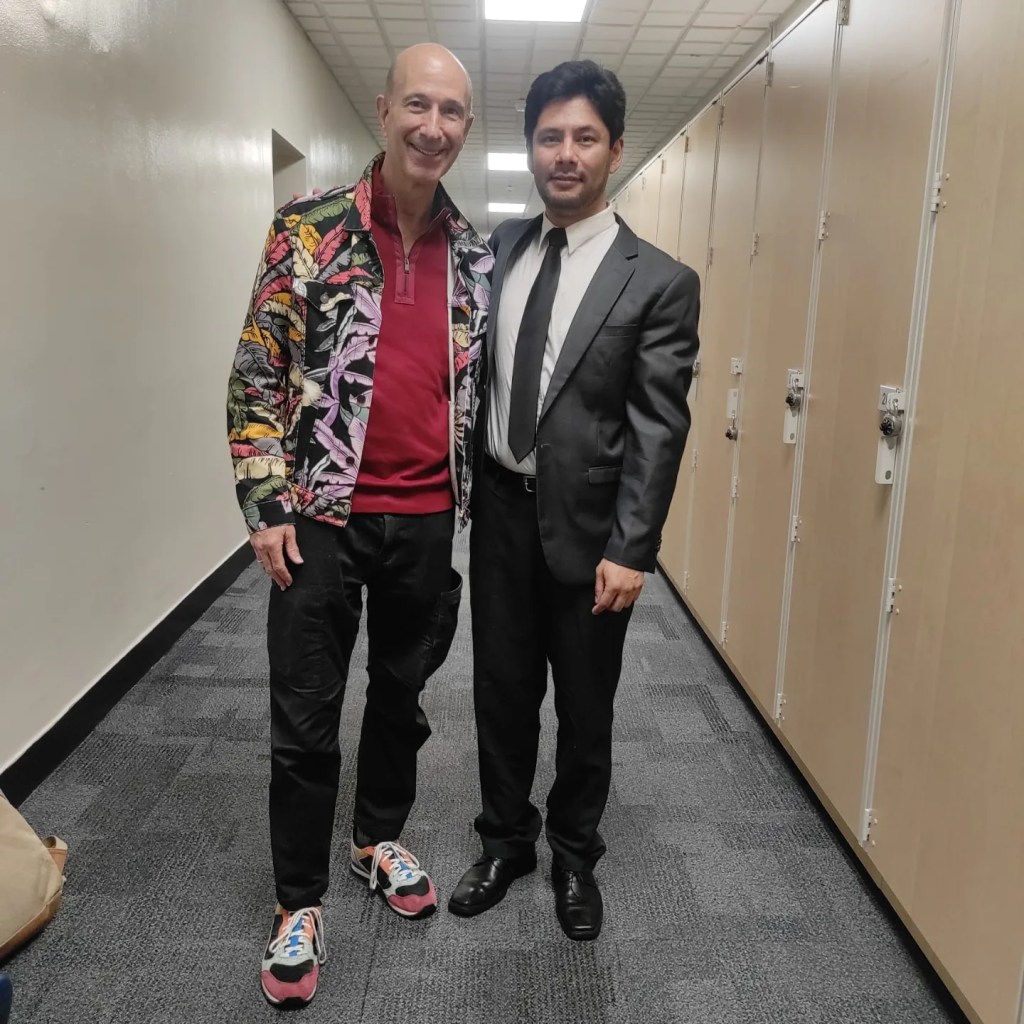
Sebastián with his teacher guide David Leisner
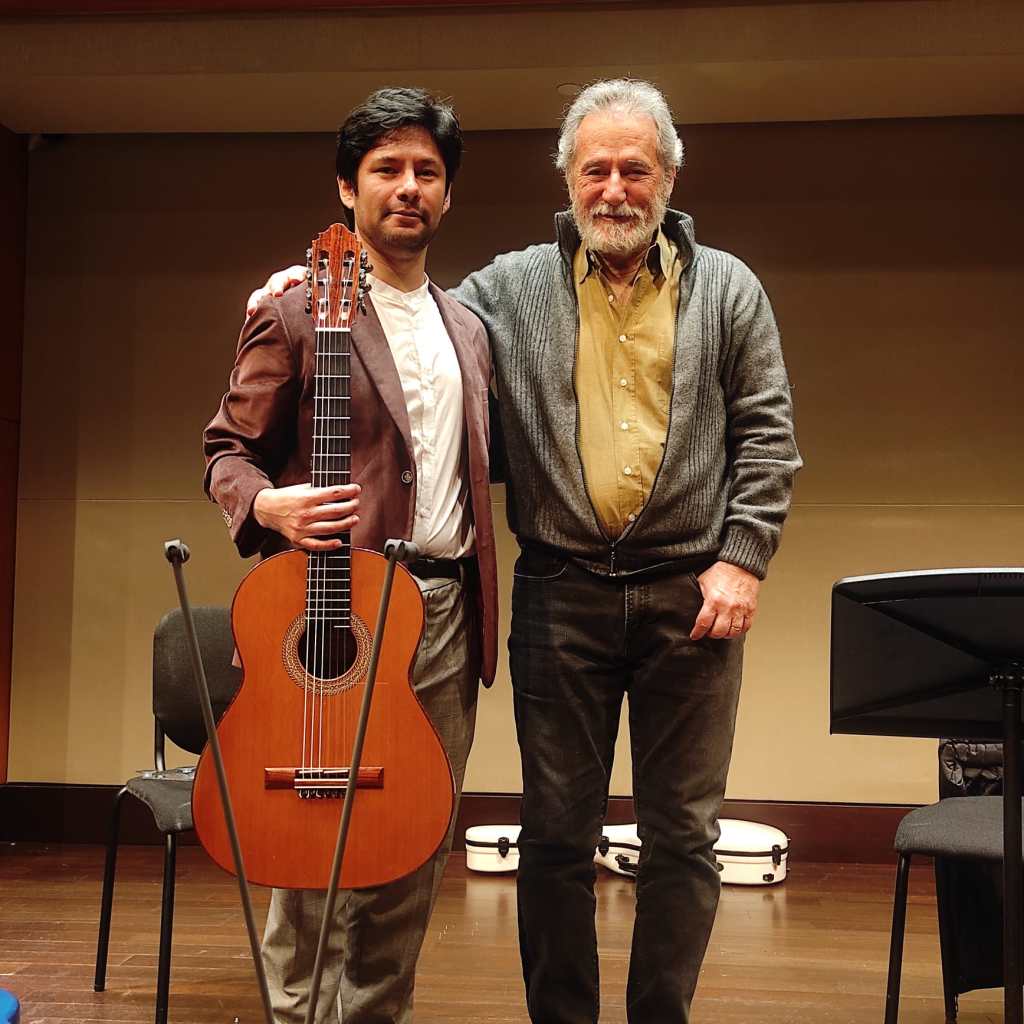
Sebastián Molina and his teacher Sergio Assad in the Master Class
WHAT MOTIVATED YOU TO STUDY MUSIC?
Since I was a child I always liked music and especially the guitar as a musical instrument, however for me they were a real mystery for some years. After some attempts to learn to play the guitar, at the age of 16 I entered the J.S. School of Culture to study. Bach, there I met the classical guitar and I can say that my musical life began. Then I continued my studies at the Universidad Austral and finished my degree in Musical Interpreter at Universidad Mayor.
WHY DID YOU DECIDE TO STUDY MUSIC ABROAD? WHY NEW YORK?
I think studying music abroad is an important goal for many students. Generally we look at Europe as the cradle of the great musical schools, however in my case I went to study the master’s degree at a mature age for a competitive musician, so I looked for a place where I could project my career and my life more beyond perfecting my skills or focusing my proposal on becoming a specialist in some composer or virtuoso guitarist. I think the United States is very attractive as a country and New York continues to be one of the capitals of the world where there is no significant presence of Chilean artists and Manhattan School of Music is one of the most important schools in the world.
TO FINISH YOUR STUDIES YOU WON 4 SCHOLARSHIPS TELL US WHAT THAT PROCESS WAS LIKE.
It was a 3-year process, since in 2019 I was studying musical improvement studies with Dr. Nicolás Emilfork in Santiago, already with the clear objective of studying a master’s degree abroad. It was at that moment when I found out that the Ernesto Quezada Guitarra Viva Foundation had opened a call for a Postgraduate Scholarship (which by the way I believe is the most economically important scholarship that a student can apply for in Chile and why not say it a of the most important in Latin America), so I applied to this call in 2020, the same year I applied to MSM (Manhattan School of Music) and then received a scholarship offer from the school. So at the end of 2020 I had significant capital, but it was still not enough to cover the project, and in 2021 I obtained the SCD Postgraduate scholarship and in 2022, once I started my studies in the United States, I received the news of obtaining from the Chile Crea Scholarship, support that fell from the sky, since I was already here and needed this financial support to complete the two years of study.
YOU HAVE MANY STUDIES. WHY DO YOU THINK STUDIES IN MUSIC ARE NECESSARY? TO WHAT EXTENT IS MORE STUDY NEEDED THAN TALENT?
I think that in generations before mine, Masters and Doctorates in musical performance on the guitar were not so common, however for some years now it is no longer enough to play the guitar extraordinarily well, win demanding competitions or record albums on international labels, Well, to consolidate a musical career it is also necessary to get a position as a teacher and trainer and for this it is necessary to have advanced academic studies. As I said, it is no longer enough to have been a child prodigy or to have had a career as a concert performer to function in the academy. However, in my opinion, doctoral or master’s studies are not for all musicians; there are those who seek to pursue a career and develop themselves in other complementary fields, which is also very important.
Finally, regarding talent, a certain amount of musical talent is always important, however you must work hard as if you did not have it, with humility and openness to learn and absorb as much as possible.
WHAT WAS IT LIKE TO MEET GUITARIST DAVID LEISNER? TELL US WHAT THAT WAS LIKE AND WHAT YOU HAVE LEARNED FROM IT.
I met my Master’s teacher through his book “Playing with easy” the title caught my attention and after reading it I realized that he was a teacher with a lot of experience in the preparation of the guitarist, he taught broad topics, from how to sit with the instrument to how to mentally prepare for an important recital, but above all I noticed that he was very generous with his knowledge. Secondly, I learned about his role as a composer, his works for guitar and his music for other instrumental and vocal formats. These really surprised me and that was what finally helped me make the decision to prepare my audition at his studio in Manhattan. School of Music. I feel that I had an intense and fruitful experience being his student for two years, I learned, for example, to recognize body tensions that I was not aware of and to focus concentration to connect the body and mind when playing the guitar, we worked on how to breathe, how to move. the arms, how to achieve a powerful and penetrating sound without excess tension, in short, I think I improved my technique a lot and most importantly I feel that I managed to complement and enhance my artistic proposal, which is very exciting. It’s like giving meaning to years of searching for a special repertoire that identifies you as an artist and that at the same time enhances all your technical and musical skills.
HOW HAS YOUR EXPERIENCE BEEN IN ONE OF THE MOST IMPORTANT MUSIC SCHOOLS IN THE WORLD LIKE MANHATTAN SCHOOL OF MUSIC?
It has been an intensely wonderful experience. From the beginning I was subjected to a great pace of study, because the level is very high and competitive, you have to think that it is a multicultural school with students from almost 50 countries, and each of these students has been the most talented and outstanding in their field. respective country. On the other hand, there are students from other great schools in the United States who have received one of the best musical training from a very young age, and then there is one who has come to live a dream, to try to make his way in a top school. high level in an amazing city. All that remains is to do your best and enjoy every moment of learning and personal improvement, which without a doubt have been many.
WHAT HAS YOUR CAREER IN CULTURAL MANAGEMENT BEEN?
I started in 2009, like many, promoting my career through self-management, that is, applying for competitive funds to carry out my concerts, album recordings, national and international tours, etc. On the other hand, between 2014 and 2019, I organized and directed the Sonamos Latinoamérica-Valdivia Festival, headquarters in Chile of the Sonamos Latinoamérica Festival network, today present in more than 10 countries in Latin America and Europe.
Then I undertook my personal project to come to the United States, however I hope to soon resume the Festival with new airs and artistic seal. You can learn more at http://www.sonamoslatinoamerica.com
Also for some summers, together with my wife (girlfriend at the time), we designed the Artistic School project at the San Juan Bosco Community Center in my neighborhood.
It consisted of guitar, singing and keyboard classes for children from nearby neighborhoods during the summer and winter vacation periods. We did this as a volunteer in 2012 and 2013.
In New York, shortly after arriving, I took our idea of volunteering to a church in the Bronx, the idea was liked and we soon implemented it in the church “Our Savior Catholic Church” and that’s how I realized that here in the United States work is not paid as a volunteer, unlike in our country, it is valuable and recognized, as it demonstrates the capacity for organization, leadership and, most importantly, it gives credibility and generates trust. That was my best letter of introduction in NYC in terms of cultural management.
WHY DID YOU DECIDE TO TAKE CLASSES? WHAT DOES IT MEAN TO YOU?
Teaching is something I like to do. I started teaching guitar in my last years at the Conservatory in Santiago, helping beginners prepare for admission exams in different schools and conservatories in the capital. I also taught through F.N.D.R projects. de los Ríos in my hometown Valdivia, and also in La Unión and Lago Ranco. Then I studied pedagogy in Secondary Education at the PUC and from 2015 to 2021 I taught as a music teacher in schools such as The Grange School and Instituto O’higgins de Maipú and in New York I have continued teaching in Spanish and now in English as a music teacher from the “Holy Child Catholic Church Academy” elementary school.
COULD YOU MENTION ANY OF YOUR GREATEST ACHIEVEMENTS DURING YOUR STAY IN NYC?
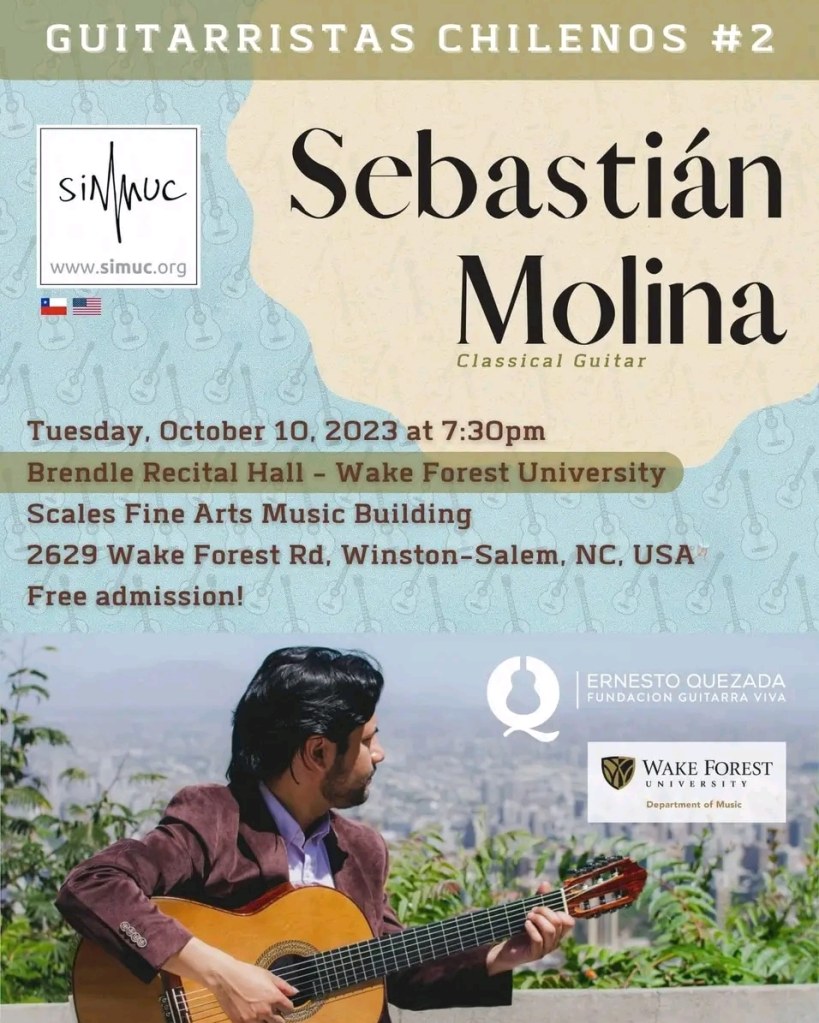
I think there have been several, of which I would like to highlight that I had the opportunity to premiere two works by Chilean composers, “Volve a los 19” by composer Felipe Pinto d’Aguiar, this work was commissioned by the Fundación Guitarra Viva Ernesto Quezada in in 2022 and also together with SIMUC (International Society of Chilean Musicians) I had the opportunity to participate as a jury in a contest where 11 Chilean composers presented a work so that I could premiere it in concert in the United States, this process was very gratifying Well, I received an anonymous list and after reading the 11 works I gave my verdict that completely coincided with the jury’s commission and then premiered it in a concert at Wake Forest University in North Carolina.
On the other hand, I had the opportunity to transcribe from the piano score the work “Aires Sureños” by the Chilean composer Ramón Catalán who is based in NY, whose work is already part of my repertoire.
I was also selected to participate in the annual concert of MSM international students, an occasion in which I performed two Chilean pieces, being the only Latin student.
ARE THERE ANY MUSICAL CONCERTS OR PRESENTATIONS IMPORTANT TO YOU IN THE UNITED STATES?
I can mention my participation in June 2023 in the GFA (Guitar Foundation of America) in the non-competitive category “I Played a Concert at GFA” in Greenfield Hall of the Manhattan School of Music. In September I played two concerts at The Village Trip Festival: The Village Guitarfest in Manhattan’s Greenwich Village. In October I played a solo recital at Wake Forest University, in North Carolina, a concert organized by SIMUC and Fundación Guitarra Viva, and in November I gave my graduation recital at The Miller Hall at Manhattan School of Music.
WHAT HAS BEEN THE MOST DIFFICULT IN THESE TWO YEARS LIVING OUTSIDE CHILE?
The language has not been easy for me, because in such a cosmopolitan city full of different accents and ways of speaking, it has been a real challenge, each community expresses itself differently and in such a fast city no one has time to repeat things or to stop to explain.
WHAT PLANS DO YOU HAVE FOR YOUR ARTISTIC CAREER SOON? WHAT IS THE NEW THING YOU CAN PRESENT TO US?
I just graduated from the Master of Music so I will be based in New York for at least one more year, during which time I will continue teaching and performing. I am in the process of applying to two important music schools to continue DMA studies, and I have recently been invited to participate in an early music collective, since I have just acquired a Renaissance Lute and I think that playing this instrument could give me a musical tool more to get involved in the musical circuits of NYC.
What types of work experiences have you had during your time at MSM?
Thanks to “The Center for Career Readiness and Community Impact” of MSM, I am able to offer 4 talks and concerts for an elderly help center for people with Alzheimer’s problems, and I was also able to become a guitar teacher at an after school in Manhattan for a year, which was really important, because then I got a position and a contract as a music teacher at another school.
IS THERE ANYONE YOU WANT TO THANK?
First of all I want to thank my sponsors for this incredible opportunity, the Fundación Guitarra Viva Ernesto Quezada, SCD, the Chilean Copyright Society, the Ministry of Culture, Arts and Heritage and The Manhattan School of Music. To my wife Belem Abraham for accompanying me all this time away from her family and even more so now that we are parents of a beautiful six-month-old baby who was born in the middle of the New York summer. I also thank my family in Chile, my mother and especially my grandmother who recently passed away. I thank her for lovingly caring for me as a child and for teaching me so many things that made me what I am today. I also thank my MSM professors, especially David Leisner and the guitar department. To my friend Ramón Catalán who guided me and helped me navigate in NYC and helped me get my first gigs in NY, and finally I thank Father Jorge Fernandéz who trusted us and who, almost without knowing me, offered me my first contract in NYC.
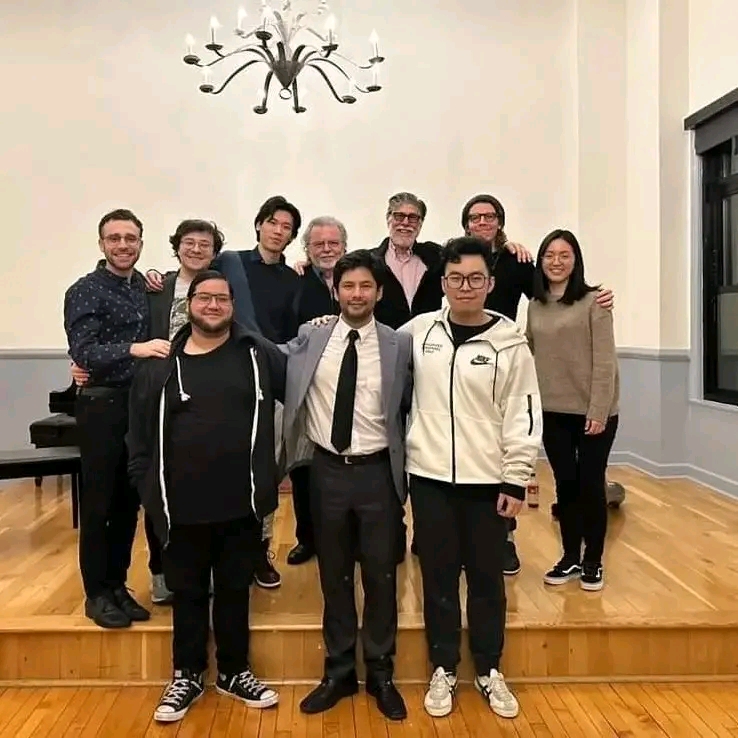
Sebastián with the MSM Guitar Studio group
HOW CAN THE PUBLIC BE IN CONTACT WITH YOU, OR FOLLOW YOUR CAREER?
You can visit my website: www.sebastianmolinaguitar.com, I also have an Instagram account: @sebastianmolinaguitar

 www.cmstudiosinc.com
1 comentario en “SEBASTIÁN MOLINA: «A quota of musical talent is always important, but you must work hard as if you did not have that talent»”